

Sustainable landscape design thoughtfully utilizes plants, materials, and diverse features to curate an outdoor space that is environmentally efficient. By employing principles of ecological landscape design, it creates a more natural habitat, reduces harmful toxins, and notably decreases maintenance needs and expenses.
At 1to1 Plans, our team is dedicated to fostering sustainability by integrating cutting-edge eco-friendly design principles. By viewing designs on a 1:1 scale and panning around using IMAX screen elevations you can integrate sustainable strategies in every design aspect.
This guide to sustainable landscape architecture will explain how sustainable landscape design can benefit your home and lay out how to put environmental landscape design principles to work in your yard.
Overview
What is Sustainable Landscape Architecture?
Sustainable landscape architecture is more than just creating visually appealing outdoor spaces – it’s about preserving nature and conserving resources. This approach to landscaping integrates ecological principles, using methods that benefit both the environment and its inhabitants.
Benefits of Sustainable Landscape Architecture
Adopting sustainable landscape architecture offers an array of benefits that extend beyond aesthetic appeal. By integrating eco-conscious principles into landscaping, the following advantages become apparent:
Environmental Preservation: Minimizing detrimental impact on the environment, leads to the preservation of natural resources and encourages biodiversity. Through strategic planning and implementation, this approach minimizes harmful disruptions to ecosystems, contributing to a healthier planet.
Resource Efficiency: By employing methods such as efficient water usage techniques, reduced energy consumption, and employing eco-friendly materials, it not only minimizes waste but also lowers long-term maintenance needs.
Beyond its ecological impact, sustainable landscaping significantly enhances the overall quality of life. Eco-friendly landscapes contribute to improved air and water quality, making healthier environments for inhabitants. Moreover, these spaces serve as sanctuaries for relaxation and recreation, promoting mental well-being and a deeper connection to nature.
Components of Sustainable Landscape Design
Two of the main places you can put environmental landscaping to use are in your vegetation and the building materials you choose.
In the Garden
Green landscape design begins in the garden.
Permaculture Gardens
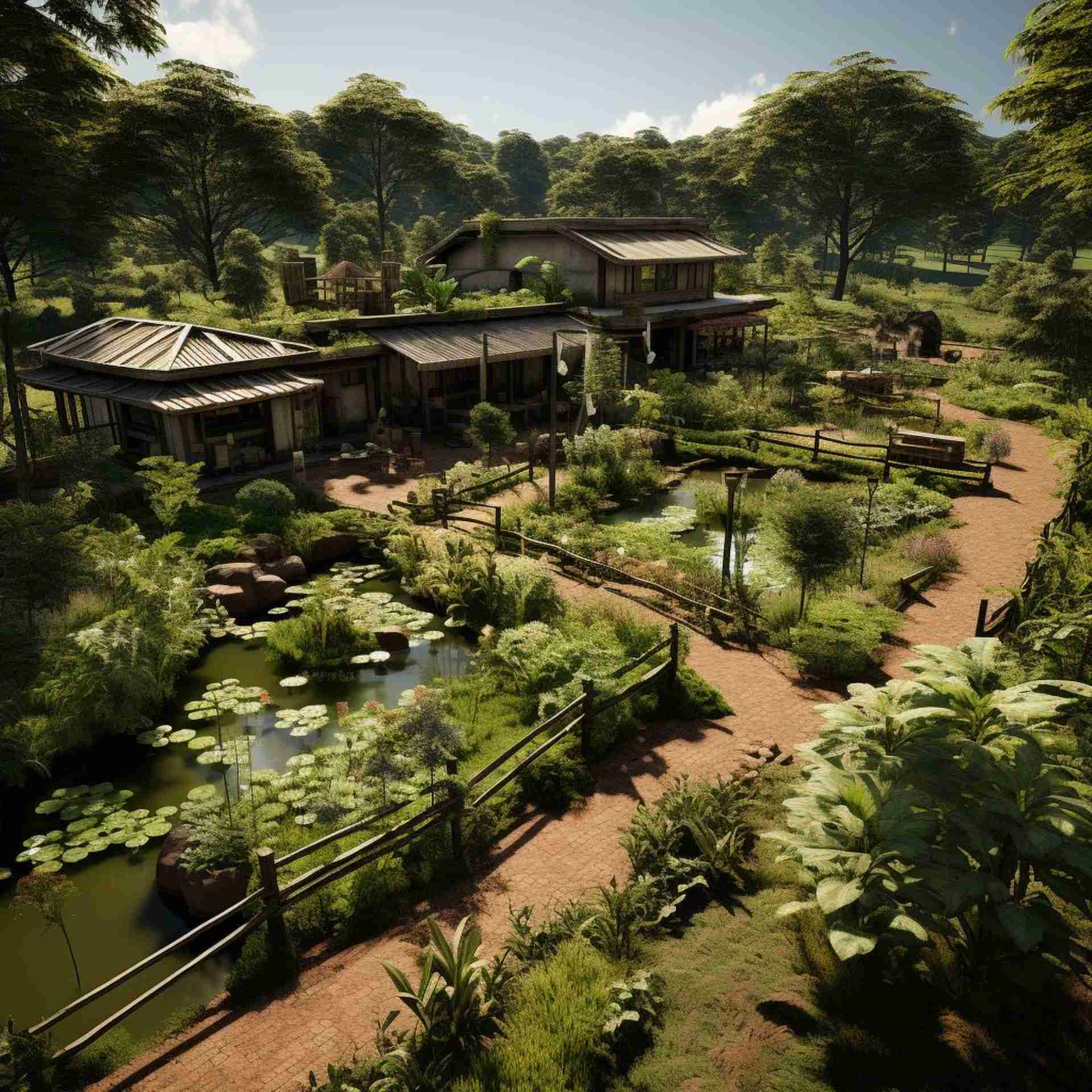
Designing permaculture gardens involves creating self-sustaining ecosystems. Utilizing companion planting, natural pest control methods, and organic gardening techniques creates a regenerative landscape design.
Vertical Gardens
Utilizing vertical spaces by installing living walls or vertical gardens optimizes space while adding greenery. Incorporating planters on walls with climbing plants not only enhances visual appeal but also maximizes green spaces in urban settings.

Sustainable Irrigation Systems
Installing innovative irrigation systems such as drip irrigation or smart irrigation controllers helps optimize water usage. These systems deliver water efficiently directly to plant roots, reducing wastage and supporting healthy plant growth.

Hard Landscape Design Elements
Now that we’ve talked about what to grow for a green landscape let’s talk about the materials that can help further sustainable design principles.
Permeable Paving Systems
Implementing permeable paving systems serves as an effective strategy to manage stormwater runoff. These systems allow rainwater to infiltrate the ground, reducing runoff, preventing soil erosion, and replenishing groundwater reserves. Materials such as permeable concrete pavers or porous asphalt create a durable surface while promoting water conservation.

Solar-powered Outdoor Lighting
Incorporating solar-powered lighting fixtures within the landscape design offers an eco-friendly alternative to traditional lighting. Installing solar energy reduces dependence on electricity, contributing to energy efficiency and lower carbon footprints. These solar-powered lights for pathways, garden accents, or security lighting not only enhances safety but also aligns with sustainable design practices.

Recycled Garden Structures
Constructing features like benches, trellises, or raised planters using recycled plastic or composite materials diverts waste from landfills and reduces the demand for new resources. These structures add functionality and aesthetic appeal to outdoor spaces while promoting a circular economy.

Visualize Your Space with 1to1 Plans
With 1to1 Plans’ floor plans you can visualize and plan your sustainable landscape. These floor plans offer a comprehensive view of your space, enabling precise planning and implementation of sustainable design elements. Assessing your space’s dimensions helps in selecting appropriate features that align with the area’s size and layout.
Sustainable Landscaping Ideas for Different Spaces
For small areas, consider creating space-efficient features such as herb gardens or butterfly gardens. Explore vertical gardening using crates or pots attached to fences or walls to optimize limited space effectively.

In larger spaces, you can opt for eco-friendly alternatives like replacing lawns with gravel to minimize water consumption. There can be extensive vegetable gardens utilizing rainwater collected in barrels, contributing to self-sufficiency.

Conclusion
Finding it difficult to decide on the materials and strategies needed to create a sustainable landscape. That’s where we come in. With a design idea in mind, you’re ready to visualize it efficiently on our walkable digital floor plans.
Contact us today to learn more about how 1to1 Plans can help you create your dream sustainable design.


